

 LinkedIn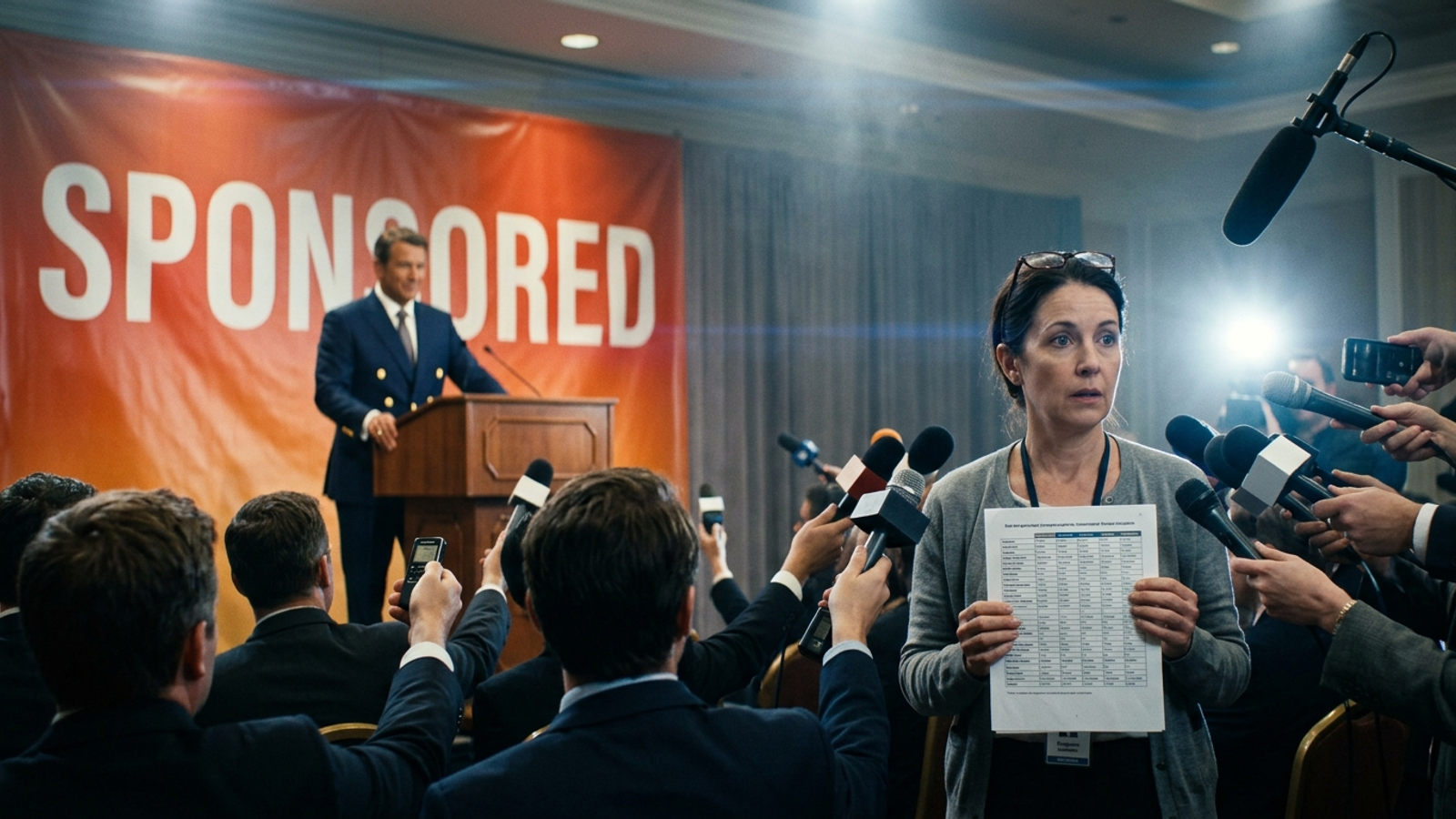
Say you spend $20,000 a month on Google Ads and spot your brand directly above an AI Overview for your category’s biggest commercial query. You bought the slot, so you’re in the answer, right? No. Your ad is a paid placement; the Overview underneath can cite two competitors while never mentioning you. PPC teaches us to pick the query, bid for position and win the click. That logic breaks when an engine chooses which page to quote across Google AI Overviews, ChatGPT and Perplexity. If you’re deciding where to spend your first engineering hours, start with which citation surface to prioritize. Then leave these seven auction assumptions at the door.
Myth 1: “Ads in AI Overviews are the shortcut to being cited”
Why people believe it: In Google Ads, money buys presence. When Google changes the results page, performance marketers expect a new auction checkbox. Ads appearing alongside and within AI Overviews made “AI Overview ad placements” sound like a proprietary early-adopter channel. I understand the appeal. Buying an ad is considerably faster than making a page worth quoting.
Why it is wrong: Google Ads documentation describes ads appearing above, below or within AI Overviews as ads served from existing Search, Shopping and Performance Max campaigns. They carry a “Sponsored” label. An ad placement is not a source citation. You cannot bid specifically on an AI Overview as an isolated placement or make the model incorporate your ad copy into its answer. Your paid result may get a click; the generated answer may still quote somebody else.
What is true instead: Keep buying search clicks when the economics work. But if you want to appear as a source in the answer, give the engine a useful answer to cite. Broad match and a bigger bid will not write that passage for you.
Myth 2: “Ranking #1 organically means the AI will quote you”
Why people believe it: Position one feels like the summit of search. If Google ranks your URL above every rival for a query, surely its answer engine will pull from that page first. It is an understandable assumption, especially when you have spent months trying to reach that spot.
Why it is wrong: Ranking a page and selecting a passage are different jobs. In an Ahrefs analysis of 863,000 results pages and four million AI Overview URLs, only 37.9% of cited URLs appeared in the top 10 organic results for the primary query; 31% sat outside the top 100. A BrightEdge study also found a substantial gap between top-10 rankings and citations. The studies do not make organic rank irrelevant. They do make rank a poor stand-in for citation likelihood.
Picture a 4,000-word guide that ranks first but buries its useful comparison beneath five headings of windup. A technical page farther down the results puts that comparison in a compact table. The answer engine needs the comparison, not a trophy for the highest-ranking URL. The passage has to do the work.
What is true instead: Do not abandon traditional SEO. Make the answer easy to extract: put the direct response near the top of a relevant section, then supply the numbers, specifications or policy details that support it. You do not have to beat the category giant for every head term to write the clearest answer to a buyer’s narrower question.

Myth 3: “An AI prompt is just a keyword with more words”
Why people believe it: A search like “enterprise crm with hubspot sync” looks like a high-intent keyword with modifiers. A PPC operator can put it in an ad group, match the landing-page headline and bid for the click. So a long AI prompt looks like the same job with more words to copy into subheadings.
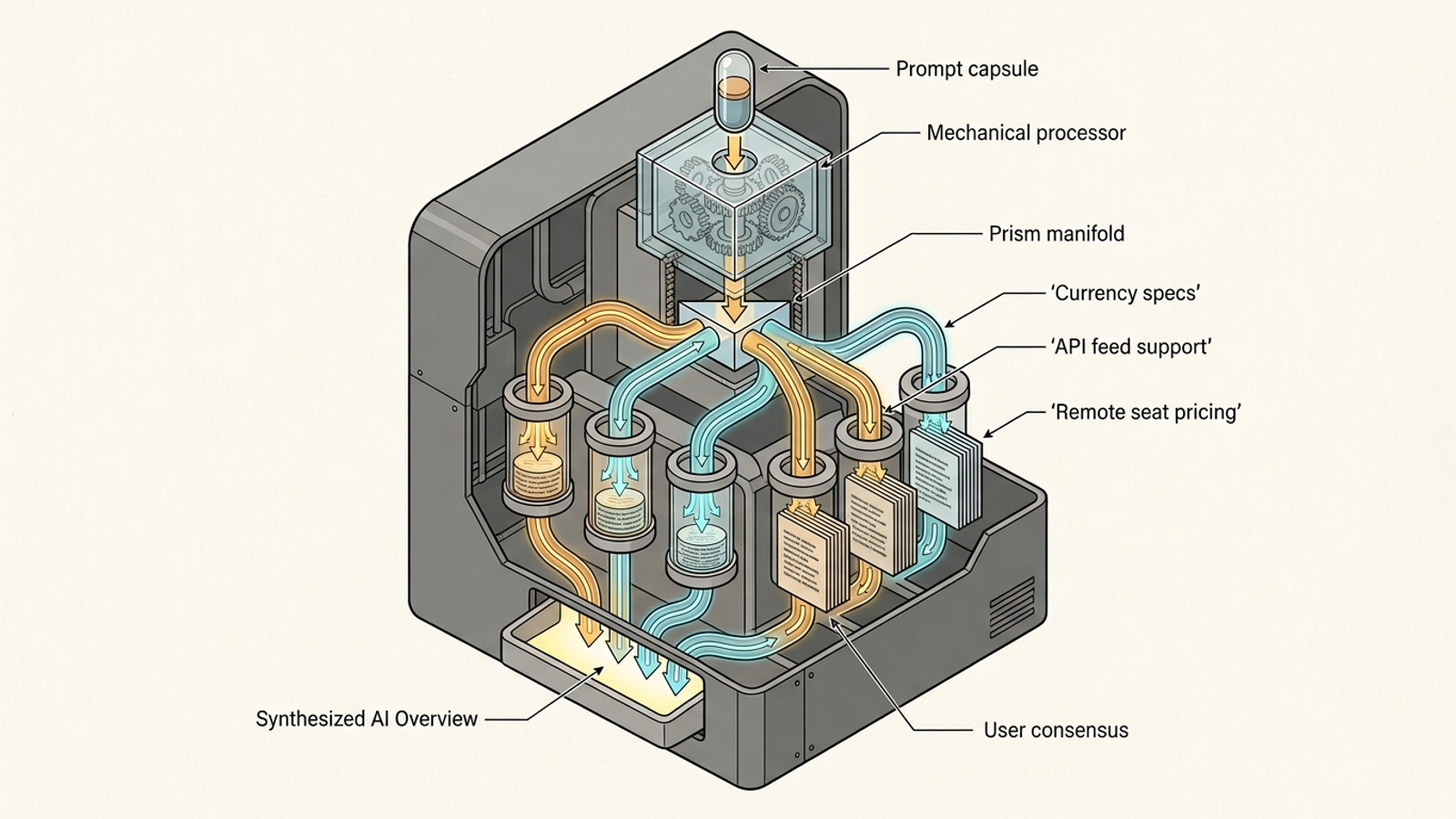
Why it is wrong: A complex prompt can trigger query fan-out: the engine breaks a request into smaller searches before assembling an answer. Conductor’s explanation of query fan-out lays out that mechanism. If a buyer asks which B2B billing software supports multi-currency consolidation and automated tax compliance for distributed teams, the engine may look separately for currency handling, tax integrations and seat economics. Repeating the buyer’s whole question on your landing page does not answer any of those investigations.
The failure is familiar to anyone who has written a tightly matched ad that led to a vague landing page. The wording matched. The substance did not. If your page promises a technical breakdown but hides the details behind “Talk to Sales,” another source can supply them. Prompt matching is not answer coverage.
What is true instead: Treat the prompt as several research tasks. Publish accessible answers to the component questions: the specification, the pricing rule, the integration detail or the limitation a buyer needs to know. Write for the sub-question the engine is trying to settle, not just the conversational phrasing the buyer typed.
Myth 4: “Monitoring your mentions is the same as improving them”
Why people believe it: PPC people love a dashboard. We have spent years checking impression share, Quality Score and Auction Insights, then looking for the next lever to pull. AI visibility tools offer a familiar screen: prompt lists, citation counts, competitor mentions and lines that move up or down. The screen feels like work because it describes a problem precisely.
Why it is wrong: An Auction Insights report does not recalibrate a bid or add a negative keyword. An AI visibility report does not write a missing comparison table, make a page accessible to crawlers or answer a question your site dodges. Observation is a diagnostic step, not the fix. You can pay for a 400-row list of prompts where a competitor appears and still leave every relevant page unchanged.
That is the useful distinction when choosing tools that help you get featured, rather than merely monitored. Tracking shows you where to investigate. Someone, or something accountable for execution, still has to turn that finding into a better page. A graph cannot edit your API documentation, however beautifully it renders the line.
What is true instead: Use monitoring to find gaps, then prioritize the ones tied to buyer questions. Check what an answer needs, whether your site supplies it, and whether the relevant page can be found and read. Deploy the missing material and check again. A list of 50 omissions has no value until it changes what you publish.
Myth 5: “Schema markup alone gets you picked”
Why people believe it: If you learned search through Shopping feeds or dynamic search ads, clean structured data feels powerful. Feed Google the right fields, open the right inventory. Applying that instinct to AI search gives agencies a tidy deliverable: add FAQPage, Product and Organization schema, watch a testing tool turn green, then declare the site ready.
Why it is wrong: Structured data clarifies what a page describes. It does not supply the answer a buyer came for. Google Search Central’s guidance on AI features says structured data is not a special requirement for appearing in those features. As Search Engine Land’s discussion of schema and AI search makes clear, markup can help identify entities without acting as a pass to a citation. Put flawless JSON-LD around vague marketing copy and you still have vague marketing copy. Valid markup cannot rescue an unhelpful page.
What is true instead: Use schema where it accurately describes the content. Then inspect the content itself. Can a reader find the relevant specification, comparison or policy without submitting a form or decoding a slogan? If not, fix the page before celebrating the green checkmark.
Myth 6: “The biggest brand in the category always wins the citation”
Why people believe it: Big advertisers can buy a lot of auction coverage. They have familiar names, established sites and budgets that smaller challengers cannot match. It is tempting to assume an AI engine will repeat that hierarchy and quote the category leader whenever someone asks a category question.
Why it is wrong: Recognition does not fill in a missing answer. A large company’s page can rank and still leave a specific question unresolved: What does a tier cost? How does an integration work? What are the API limits? A “Request a Demo” button may be sensible sales design, but it is not a public technical explanation. If a smaller competitor publishes a direct, accessible comparison, that page gives the engine something the famous brand’s page does not. Budget cannot substitute for a usable source passage.
This is not a promise that a challenger gets quoted just by publishing a table. The table has to be accurate, relevant and consistent with what a buyer can verify elsewhere. But the practical opening is real: answer the question the larger rival leaves unanswered. Do not imitate its broad positioning and expect a different result.
What is true instead: Keep brand recognition and citation coverage separate in your plan. For narrower questions, publish the details you can stand behind: pricing rules, technical limits and plain-language comparisons. Make them available without a gate. A smaller brand cannot outbid a category leader inside a citation, because that is not the contest.

Myth 7: “Set it up once and you’re done, like a campaign launch”
Why people believe it: A launch has a satisfying finish line. Build the account, wire up conversion tracking, turn on the campaigns, then make adjustments as results come in. Agencies can sell AI visibility the same way: a one-off sprint for title tags, metadata, schema and a sitemap. Hand over a checklist. Send the invoice.
Why it is wrong: The answer is not a permanent slot you secure at launch. AI Overview citations can change as the pages available to the engine and the answers it assembles change; Search Engine Journal’s reporting on shifts in citations from top-ranking pages shows why yesterday’s ranking-to-citation assumptions are a poor operating plan. A competitor can also publish a clearer specification while your once-useful page sits untouched. Updating a sitemap will not repair an outdated price or add the comparison a buyer now needs.
I find this the hardest myth to kill because the setup work is visible. You can point to completed tags and a passed test. Ongoing editorial and technical work looks less ceremonial: find the missing answer, check the underlying claim, update the page, see whether the gap closes, repeat. It is much closer to maintaining a live ad account than launching one. Citation work is an operating discipline, not a launch deliverable.
What is true instead: Keep the paid-search auction and the answer engine in the same plan, but do not confuse their jobs. Buy a click when the auction makes sense; earn a citation by maintaining useful, accessible answers. That need for continuous execution is why groas pairs autonomous paid and organic search work with a named human strategist who sets direction and guardrails. You can automate the routine work. You cannot declare the answer finished and walk away.